
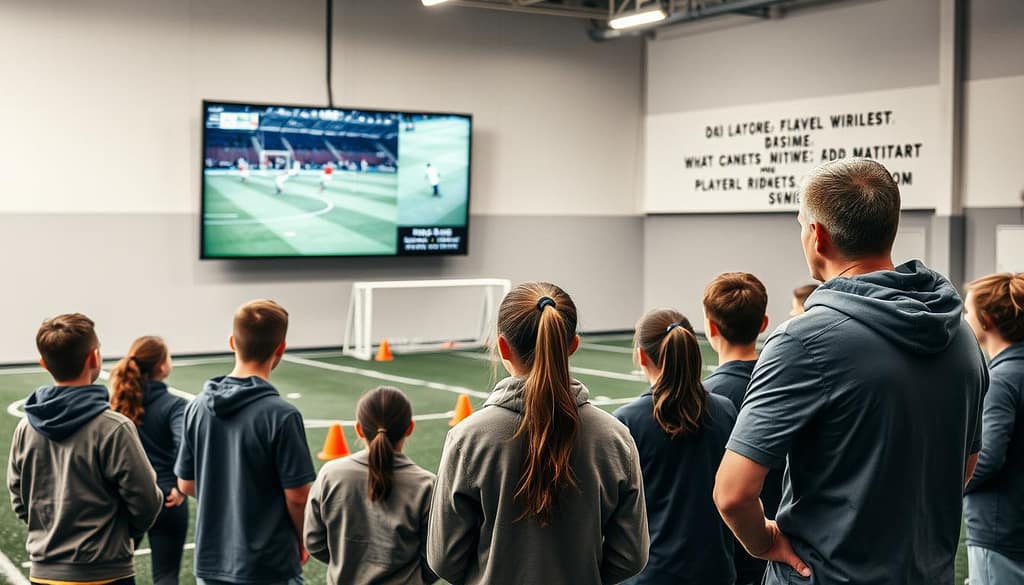

In the world of player development, having a clear plan is key. Many coaches rely too much on scrimmages, hoping for better results without a solid strategy. This article argues for a more structured approach, focusing on specific weaknesses.
Coaches should use video analysis, skill drills, and scrim blocks to create a solid training plan. The aim is to tackle one weakness each week, like late rotations or timing issues. This method boosts accountability and turns practice into measurable progress.
Using a baseline-to-target model helps set achievable goals and track progress. With the right metrics, coaches can see if players are really getting better. This method balances drills with scrim blocks, helping players apply what they’ve learned in games.
Drill Bank by Weakness
Creating a drill bank that targets weaknesses can greatly improve gameplay. This method turns reactive coaching into proactive skill building. Coaches can address each player’s unique needs by organizing drills based on specific weaknesses found during VOD reviews and scrim blocks.
Instead of using generic aim trainers or repetitive warm-ups, coaches should focus on drills that target specific weaknesses. For example, if a player has trouble with over-peeking in close-range fights, a drill can help improve their timing and decision-making. This targeted practice sharpens individual skills and boosts team performance.
To effectively implement this system, consider the following steps:
- Identify Weaknesses: Use player profiling to diagnose issues and pinpoint areas for improvement.
- Develop Custom Drills: Create drills that focus on the specific skills needed to close gaps quickly.
- Sequence Training: Break complex tactical failures into trainable sub-skills, progressing from simple to more advanced drills.
For example, micro-timing drills with decision gates can help players practice their reactions under pressure. Also, 1-round simulations with strict commit windows force players to make quick decisions, improving their gameplay in real scenarios. These exercises train both the body and mind, preparing players for scrim block challenges.
To keep drills engaging and effective, it’s important to rotate them within scrim blocks. This approach allows trained behaviors to be tested in live scenarios, creating a continuous learning cycle: see it → train it → try it. By following this cycle, players can strengthen their skills and adapt to the ever-changing nature of gameplay.
| Drill Type | Focus Area | Example Drill |
|---|---|---|
| Micro-Timing Drill | Decision Making | Timed Reaction Exercise |
| 1-Round Simulation | Commitment Timing | Strict Window Challenge |
| Cognitive Exercise | Pressure Decision Making | Time-Limited Scenarios |

Solo VOD: Tags & Timestamps
Solo VOD reviews help players improve their skills. It’s more than just watching game footage. It’s about breaking down your play and finding ways to get better.
Start by picking one thing to work on in each review. Tag 10-15 moments where this issue shows up. Make sure to note the exact time for each tag.
Then, sort each failure into a category. These include:
- Information deficit
- Positioning error
- Mechanical execution
- Timing misjudgment
- Communication breakdown
By doing this, you can find specific areas to focus on in your training. For example, figuring out why a move didn’t work can help you practice better timing and spacing.
Watching professional matches and taking notes is also helpful. Look for patterns and ask yourself deep questions. Instead of just wondering what went wrong, ask how you can improve next time.
This method not only boosts your skills but also helps your team. Solo VOD is essential for improving. It’s the foundation for creating effective drills.
| Tagging Category | Description | Example |
|---|---|---|
| Information deficit | Lack of game knowledge | Not knowing enemy positions |
| Positioning error | Poor placement during gameplay | Standing too close to the enemy |
| Mechanical execution | Failure to perform actions correctly | Missed skill shots |
| Timing misjudgment | Incorrect timing of actions | Using abilities too early |
| Communication breakdown | Poor team coordination | Not calling for help |
This structured way of reviewing VODs sharpens your analytical skills. It helps you stand out from others. For more tips on improving your solo play, check out this link.
Team Review: Rules of Engagement
To make team reviews better, it’s key to set clear rules from the start. This helps turn a session of blame into a place where everyone learns. By having a clear feedback system, teams can get better during scrim blocks.
One good way is to use the “what I saw → why it mattered → what to do next” method. This method makes sure everyone listens well and understands each other. It also helps build trust in the team.
Debriefs should aim to find lessons we can use, without blaming anyone. Asking two questions—”What should we repeat?” and “What should we change first?”—keeps the team focused on getting better.
Before scrim blocks, having a checklist for strategy can help everyone be on the same page. This makes practice sessions more efficient and less confusing.
After games, it’s important to help players deal with their feelings, specially after losing. Quick routines to reset can help players learn from mistakes without fear. In this setting, players can share when they made a mistake, seeing it as a chance to learn, not as a failure.
Here’s a summary of key protocols for effective team reviews:
| Protocol | Description | Purpose |
|---|---|---|
| Structured Feedback | Use the format: what I saw → why it mattered → what to do next. | Enhances clarity and understanding. |
| Active Listening | Coaches repeat player reasoning to confirm understanding. | Builds trust and ensures clear communication. |
| End Debriefs with Questions | Ask, “What should we repeat?” and “What should we change first?” | Focuses on continuous improvement. |
| Pre-Match Checklists | Align strategies before scrim blocks. | Minimizes confusion during practice. |
| Quick Reset Routines | Manage emotions after losses. | Encourages learning from mistakes. |

By following these rules, teams can build a culture of helpful feedback and always getting better. This not only makes them better during scrim blocks but also strengthens their bond and teamwork.
For more tips on improving team dynamics, check out our guide on understanding the ranking system.
KPIs (HS%, CL, ADR, vision) & Dashboards
Key Performance Indicators (KPIs) are key in making training effective. They focus on metrics like headshot percentage (HS%), clutch percentage (CL), average damage per round (ADR), and vision score. This turns subjective opinions into clear data, making every training session count.
Setting a baseline is important. By tagging a set number of rounds, teams can see where they start. For example, tracking how fast they decide on their first utility can show how quick they are. After setting a goal, training blocks focused on that metric help track progress.
It’s important not to just collect data without knowing what it means. Choosing one metric per goal keeps things focused. Simple dashboards can show this data, making it easy for everyone to see. Tools like spreadsheets are great for tracking progress and changing training methods.
Linking KPIs to drills shows a clear path for getting better. Metrics like death-after-first-contact rates and post-plant conversion percentages help adjust strategies. Without clear proof of improvement, claims of success are just that. This method ensures training leads to real growth in performance.