
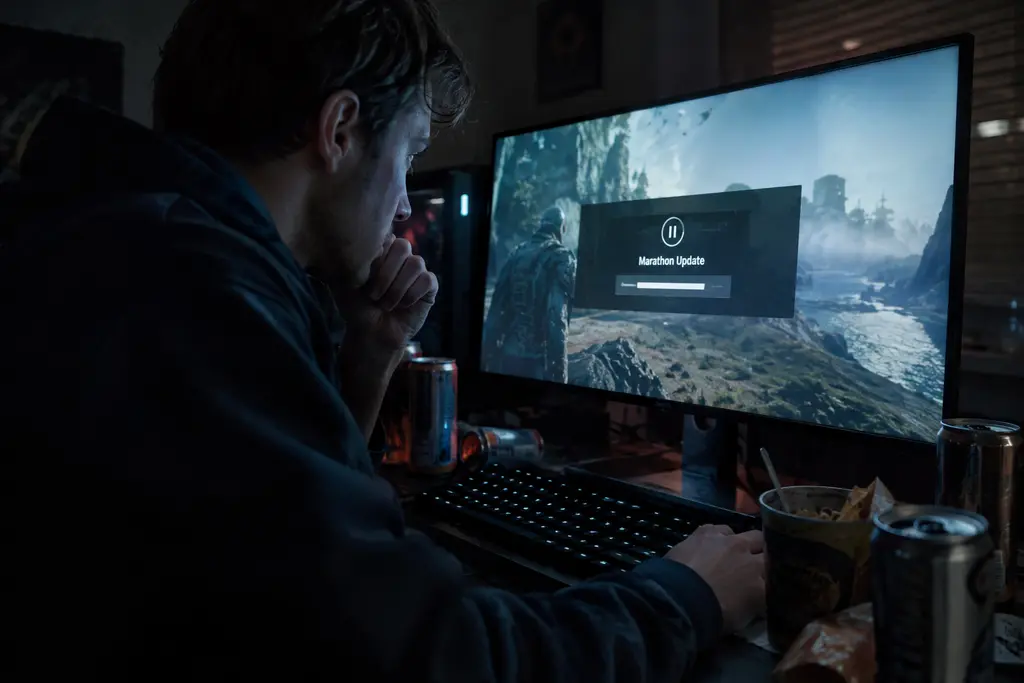
The Marathon Update Delay matters because it changed more than a date on Bungie’s release calendar. As of October 24, 2026, players had already gone through the October progression and economy reset, while the larger Symbiosis update had been pushed to December 8, 2026. That leaves the game in a difficult middle period: Bungie is trying to repair pacing and fairness, but the players most affected are the ones being asked to keep investing time while the next major update waits.
The cautious read is that this delay is not automatically a failure. Live games often need schedule changes when progression, rewards, or onboarding fail to land. The risk is that extraction games depend heavily on trust. If players believe their time investment can be reset before the reward structure feels stable, then retention and post-launch spending become harder to sustain.
What The Marathon Update Delay Changed
Marathon Update Delay And The New Cadence
Bungie said the Symbiosis update, previously planned for September 22, 2026, was moved to December 8, 2026; the studio also said it was moving away from a fixed seasonal schedule and that the October 6, 2026 Nightfall Refresh would reset player progression and the in-game economy while refreshing rewards and making balance and quality-of-life changes Bungie’s development update. Since October 6 had already passed by October 24, the reset was no longer a future concern for active players. It had become the live state of the game.
The Marathon Update Delay moved the pressure point from “new content soon” to “can the current structure hold players until December?” That is a different problem. A delayed update can be easier to accept when the existing game loop feels stable. It is harder when the delay follows a progression reset, because the reset asks players to rebuild momentum at the same time the headline update has moved further away.
The October Reset Already Happened
The timing is central. Season 2 launched on June 2, 2026, and Bungie’s own framing pointed to progression and reward problems that pushed some players too quickly toward endgame while leaving others behind. In an extraction game, that gap is not only a balance issue. It can affect whether deaths, loot losses, faction progress, and reward pacing feel fair. A reset can put players back on a shared starting line, but it can also weaken confidence if players are unsure how often the rules will change.
For readers interested in broader game-market dynamics, the related site Rave Tech provides technology insights and is part of the same network. However, the immediate question for players is narrower: did the reset make Marathon feel fairer, or did it make time spent before October feel less secure?
Player Progression After Nightfall Refresh
Why Fairness Became The Core Issue
Progression in extraction shooters has to serve two groups at once. Frequent players need long-term goals, but newer or slower players need a realistic path into competitive sessions. If one group reaches high-value tools and reward loops too quickly, the rest of the population can feel like it entered late. If rewards are slowed too much, the dedicated players may feel punished for engaging with the game.
That is why the reset was a blunt but understandable tool. It gave Bungie a chance to retune materials, levels, faction progress, and rewards under a cleaner structure. It also created a consumer problem: players who earned progress before October had to reassess the value of that time. The issue is not that resets can never work. The issue is whether the reset arrives with enough clarity, enough compensation where appropriate, and enough evidence that the next structure will last.
What A Reset Means For Different Players
For new or returning players, the reset may have reduced the sense of being permanently behind. That is the best-case progression argument. A cleaner economy can make onboarding less punishing, especially if early rewards arrive at a clearer pace. For high-engagement players, the reset may have felt closer to a loss of earned status, especially if faction standing or materials were part of their routine.
This is where Bungie’s communication matters. Players do not need every internal number, but they do need to understand what changed, why it changed, and what is likely to remain stable through December. Our earlier analysis of the Marathon reset economy focused on that same trust problem: a reset can improve fairness, but it also raises the standard for transparency.
Monetization Risk Without Overstating The Data

Engagement Is The Revenue Constraint
The public numbers available on Steam suggest the retention challenge is real, though they should be treated as third-party estimates rather than Bungie’s official reporting. As of October 24, 2026, Raijin listed Marathon around 2,300 to 2,600 average concurrent players, with roughly 3,600 players at the 24-hour peak, compared with an all-time launch peak of about 88,300 concurrent players on March 6, 2026; the same page estimated about 2.1 million Steam copies sold and roughly US$50.8 million gross revenue with “medium confidence” Raijin’s Steam data.
Those figures do not prove how much money Marathon is or is not making from post-launch purchases. They do, though, show why active engagement matters. A game can sell well at launch and still face pressure if the active base contracts before its next major content beat. Cosmetics, seasonal reward structures, and other non-gameplay monetization systems depend on people logging in often enough to care about unlocks. If players step away during the gap to December, the monetization question becomes less about price and more about relevance.
Consumer Signals To Watch
The safest consumer-aware reading is to separate three issues: paid access, time investment, and post-launch spending. Players who bought the game are now judging whether Bungie can keep a stable progression model. Players who bought or considered seasonal rewards are judging whether the content cadence supports that purchase. Players who left after launch may need evidence that the December update changes the loop enough to justify returning.
- Progression clarity: Bungie needs to show whether the October reset created a stable base or a temporary stopgap.
- Reward pacing: Rewards must feel slow enough to avoid early exhaustion but not so slow that casual players disengage.
- December delivery: Symbiosis now carries the weight of the delayed September content and the promise of a more flexible cadence.
The Marathon Update Delay also changes how players should think about spending. Waiting for December details is a reasonable choice for anyone unsure whether the new system fits their play habits. That is not a call to abandon the game. It is a practical response to a live-service plan still being revised.
Marathon Update Delay And Player Trust
The December Test Is About Stability
The Marathon Update Delay is not just a delay to Symbiosis. It is a test of whether Bungie can rebuild confidence after a reset, a weakened active player base, and a shift away from fixed seasonal deadlines. That new cadence could help if it prevents rushed updates. It could also create uncertainty if players do not know when major fixes or content beats will arrive.
For Bungie, the better path is probably not to promise more than it can ship. The evidence available on October 24, 2026 points to a studio trying to slow down, revise progression, and avoid another update that splits players by pace. For players, the practical move is to judge Marathon by what the October reset actually improved and what Symbiosis delivers on December 8, 2026. Trust will not come from the delay itself. It will come from whether the next version makes player time feel respected.