
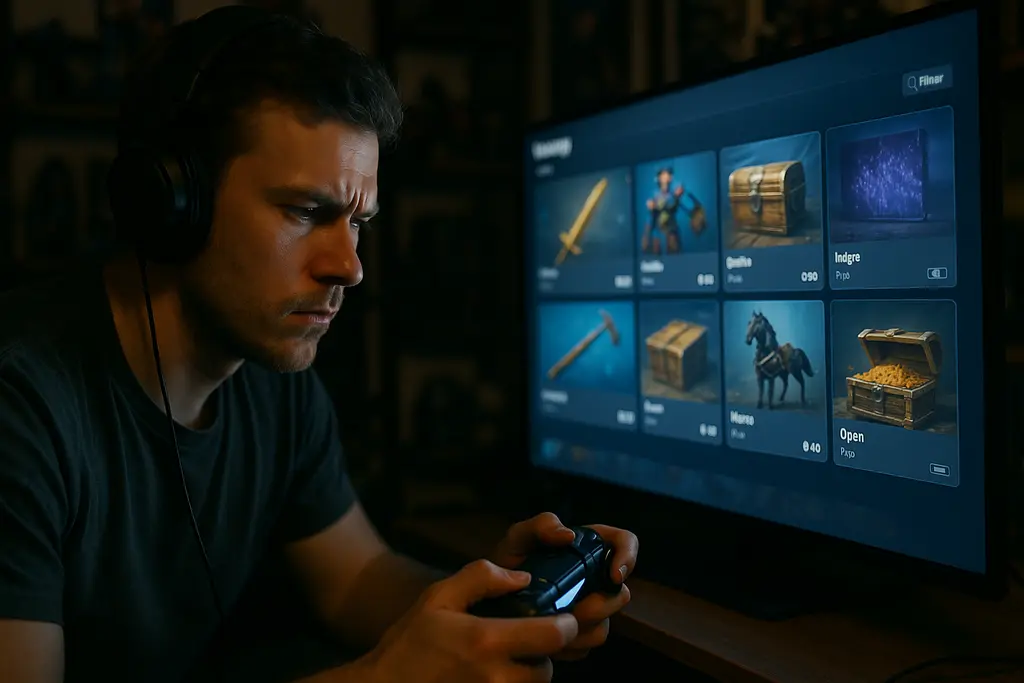

In-game monetization is moving toward publisher-owned stores, live service economies, and recurring purchase models rather than one-off boxed sales alone. For serious players, the shift is not just about how much a skin, battle pass, or currency pack costs. It changes where purchases happen, how rewards are framed, and how much control players have over refunds, platform protections, account linking, and long-term value.
The useful way to read these trends is cautiously. Publishers are responding to margin pressure, slower growth in some channels, and the proven value of repeat purchasers. Players should expect better offers in some places, but also more friction: extra accounts, payment links outside familiar storefronts, limited-time bundles, and stronger nudges toward subscriptions or live service content. The goal is not to avoid every paid system. The goal is to separate fair optional spending from systems that make costs harder to see.
Why Publisher Stores Are Gaining Ground
Direct-to-consumer selling has become one of the clearest publisher trends in 2026. Appcharge research reported that, based on a January-February 2026 survey, direct-to-consumer monetization made up about 15% of the $113.3 billion mobile gaming in-app purchase market, or roughly $17 billion; the same report said 92% of publishers expected D2C revenue to increase through the rest of 2026 Appcharge research. That does not prove every publisher store will be better for players, but it does show why more purchase paths are likely to appear outside app stores.
In-Game Monetization Signals To Track
The key signal is whether a publisher-owned store gives players clearer value or just moves the same spending pressure to a different checkout. A fair offer should state the exact item, currency amount, platform compatibility, regional price, and any expiration terms before payment. A weaker offer may rely on confusing bonus currency, unclear login requirements, or a discount that is difficult to compare against the in-game store.
Players should also treat account linking as part of the purchase, not a side issue. If a cosmetic, booster, or currency pack is bought through a web store, the value depends on whether it appears on the right account and platform. That is a setup problem as much as a spending problem. Keep receipts, check two-factor authentication, and confirm whether purchases carry across mobile, PC, and console before buying. For insights on peripherals and setup choices, the Cooler Master Gaming site covers related topics, making it a valuable resource within the network. However, spending discipline still begins with understanding the store terms in front of you.
Why Better Offers Can Still Raise Spending
Direct stores may offer bonus currency or lower prices because publishers have more control over the transaction. That can benefit disciplined buyers. It can also increase total spending if the deal structure pushes players to buy larger bundles than they need. A 20% bonus is not useful if it leaves a balance that only becomes spendable after another purchase. The strongest player strategy is to price the item you want, not the bundle the store wants you to notice first.
Live Services Are Replacing One-Time Value Tests
Publisher earnings show why live services keep attracting investment. Electronic Arts reported for its fiscal year ending June 30, 2026, that live services and other revenue rose 7% year over year, while digital full-game downloads revenue was $1.708 billion and packaged goods revenue fell to $440 million EA fiscal filing. That filing covers one publisher, not the whole industry, but it is a useful example of how major companies now measure ongoing revenue streams beside full-game sales.
For players, this means launch price is only part of the cost assessment. A game can look affordable on day one, then shift its value proposition through battle passes, cosmetic rotations, paid expansions, subscriptions, and time-limited event tracks. Some of those models can support continued development. The risk is that players pay repeatedly without getting stable access, fair pacing, or clear content boundaries.
How Live Service Design Changes Player Decisions
Live service design often turns spending into a timing question. A player may ask whether to buy the current pass, save for the next event, or skip a cosmetic because a better bundle might arrive. This creates a planning burden that did not exist in the same way with boxed releases. In competitive games, it can also affect mental bandwidth: players may spend more time checking shops and tasks than practicing maps, inputs, and team roles.
From a hardware and settings perspective, the practical answer is boring but effective: reduce distractions before ranked or high-focus sessions. Do store checks outside practice blocks. Disable nonessential notifications where the game allows it. If the paid track asks for daily play, compare that schedule against your actual routine. A pass that requires sessions you would not otherwise play is not just a purchase; it is a time commitment.
Subscriptions, Bundles, And Player Control

Subscription models are likely to keep appearing inside games and around games. The value can be real when a player consistently uses the included content, but the risk is quiet renewal. A monthly pass, premium currency stipend, or subscriber-only reward can feel small in isolation. Across several games, those small charges can exceed the cost of a full release.
This is where in-game monetization needs a household-style budget rather than impulse judgment. Players who rotate between live service titles should decide which one, if any, gets recurring spend for a given month. That decision should account for playtime, friends, ranked goals, and whether the included items would have been bought anyway. If the main appeal is fear of missing a cosmetic, the subscription is controlling the player more than serving them.
For a broader consumer angle on keeping spending systems aligned with trust, our related piece on game monetization and loyalty looks at why satisfaction matters more than short-term extraction. That matters because players are not just customers in a checkout flow; they are the communities that keep multiplayer games populated after launch windows pass.
Refunds, Platform Rules, And Off-Platform Gaps
One concern with publisher web stores is that players may lose the familiar dispute path they associate with platform storefronts. The available refund or support route can differ by publisher, country, payment method, and product type. Because the research available here focuses on market movement rather than legal outcomes, players should avoid assuming equal protection across every channel. Read the policy before purchase, especially for virtual currency and consumables.
Randomized rewards deserve extra caution. The research notes point to tighter scrutiny around loot boxes and gambling-like mechanics in multiple jurisdictions, but rules differ by region and can change. A practical player response is to favor stores that disclose odds clearly, avoid systems that require repeated purchases for uncertain outcomes, and set stricter limits for accounts used by children or shared households.
Player Strategy For In-Game Monetization
The safest strategy is to treat in-game monetization as part of game selection, not an afterthought. Before committing to a live service game, check how often it sells timed bundles, whether paid items affect competitive balance, how subscriptions renew, and whether web store purchases are tied to one account ecosystem. A game with transparent cosmetics may be easier to manage than a game with layered currency, rotating discounts, and unclear reward odds.
- Price the target item: Calculate the real-money cost of the exact cosmetic, pass, or currency amount you want.
- Check the channel: Compare in-game, platform, and publisher-store terms before choosing where to pay.
- Protect the account: Use strong authentication before linking payment methods or external stores.
- Limit recurring spend: Review subscriptions monthly, not after a season has already ended.
- Watch time costs: Skip passes that require play sessions you would not enjoy without the reward track.
The publisher trend is clear enough: ongoing revenue, direct stores, and repeat engagement are becoming more central to game business models. The player response should be just as clear. Spend where the value is visible, avoid systems that blur cost or probability, and treat every off-platform deal as a separate purchase environment with its own risks. That approach will not remove pressure from modern games, but it gives players a firmer read on which offers deserve attention and which ones should be left alone.