
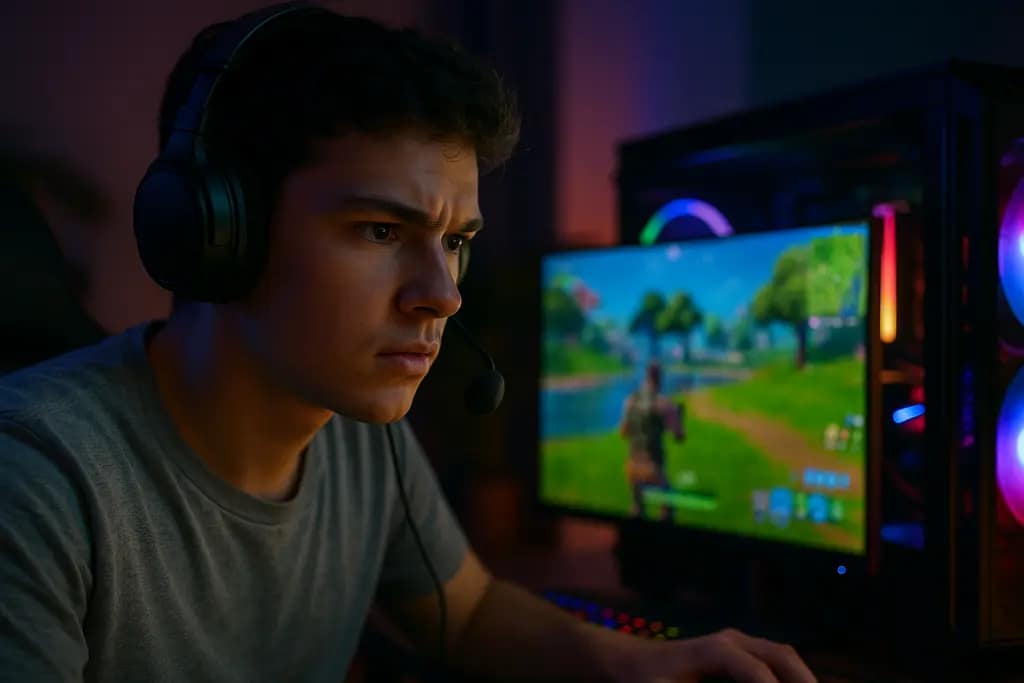

Free-to-Play PC revenue told a sharper story than playtime did during 2025. In Western markets tracked in Newzoo’s 2026 PC and console analysis — the U.S., UK, Germany, France, Spain, and Italy — PC free-to-play games generated nearly double the revenue per playing hour of PlayStation free-to-play games and about triple that of Xbox free-to-play games Newzoo reported. That does not mean every free release on PC became more player-friendly, more successful, or more stable. It means PC publishers were better at turning remaining engagement into spending, even while time spent in free-to-play games fell.
The timing matters for players watching new releases. By August 21, 2026, the relevant data covered full-year 2025 performance, not a launch window for one specific title. The figures point to a broader publishing pattern: free entry remains attractive on PC, but the business case increasingly depends on cosmetic stores, battle passes, seasonal content, and other post-launch purchases. For players, the key question is not whether a game is free to install. It is how much pressure the design puts on spending after the download.
Why Free-to-Play PC Converted More Playtime
What Free-to-Play PC Revenue Per Hour Shows
The strongest point in the 2025 comparison was revenue per playing hour. Newzoo’s reported gap between PC, PlayStation, and Xbox suggests that PC free-to-play games extracted more value from each hour that players spent in-game. That is a useful metric because raw playtime can hide weak monetization. A platform can have many hours played but still generate less revenue if fewer players buy items, if purchase frequency drops, or if spending is concentrated in fewer titles.
That said, revenue per hour should be read carefully. It is not a direct measure of player satisfaction. Higher spending can reflect strong attachment to a game, but it can also reflect aggressive shop cadence or event design. The research notes do not provide title-level data, player income bands, age breakdowns, or spending distribution. Without that detail, it would be risky to claim that PC players were happier with free-to-play models than console players. The supported claim is narrower: during 2025, PC free-to-play monetization converted engagement into revenue more efficiently in the Western markets listed.
Engagement Fell, But Revenue Held Up Better
The engagement trend was not uniformly positive. Newzoo reported that PC free-to-play playtime fell 8.1% year over year in 2025, while PC free-to-play revenue declined by only 1.1%. On consoles, the revenue declines were steeper: PlayStation free-to-play revenue fell 8.2%, and Xbox free-to-play revenue fell 39.1%, according to the same research. That contrast is the core evidence behind the PC advantage.
For players, the practical reading is that free-to-play on PC remained financially resilient even as people spent less time in those games. This can encourage publishers to keep launching free products on PC, but it can also raise the stakes around monetization design. If fewer hours can still produce similar revenue, companies may lean harder into the systems that already convert well. That may be harmless in a cosmetics-only store, but more concerning if progression, event rewards, or limited-time offers become tied too closely to purchases.
Console Comparison And Revenue Pressure
PlayStation And Xbox Did Not Move The Same Way
The console comparison should not be reduced to a simple claim that free-to-play is failing on consoles. Newzoo’s 2025 figures showed that free-to-play still accounted for a large share of playtime: 41% on PlayStation and 34% on Xbox, compared with 44% on PC. Those are not marginal engagement numbers. Players continued to spend a large portion of their gaming time in free games across all three platforms.
The difference was revenue resilience. Xbox, in particular, showed a much steeper free-to-play revenue drop in the research notes than PC did. The available data does not explain the cause. It could involve title mix, platform spending behavior, catalog maturity, subscription effects, regional differences within the tracked markets, or other factors not broken out in the public summary. A cautious reading is best: consoles still have free-to-play engagement, but the 2025 revenue conversion was weaker than PC’s in the cited comparison.
Premium Releases Still Shape Console Habits
The research notes also state that console revenue remained more dependent on premium pay-to-own titles during 2025, with around half of console revenue coming from premium games. Because that figure comes from the supplied research but not from one of the approved inline sources for this article, it should be treated here as context rather than a separately cited data point. It fits a pattern players can see in release calendars: major console launches still often arrive as boxed or full-price digital releases, while PC storefronts host a wider spread of free, discounted, and lower-priced games.
That difference affects expectations. Console players may be more used to paying upfront for a complete campaign or a large boxed release, then evaluating expansions later. PC players may be more likely to sample a free title, leave quickly if the opening hours feel weak, or stay for years if social play, updates, and progression work. Neither model is automatically better for consumers. The trade-off is clear: upfront pricing makes cost easier to see, while free entry can make long-term spending harder to track.
What Free-to-Play PC Means For New Releases
Free Entry Is No Longer Enough
For new releases, the Free-to-Play PC trend is a signal that launch strategy and retention design are now closely linked. A free install can reduce friction, but it does not solve the harder problem: keeping players without pushing them into spending patterns they later regret. The 2025 data showed that PC revenue held up better than playtime, which may make the model attractive to publishers. Players should read that as a reason to inspect monetization early, not as a reason to assume a free release is low-risk.
A useful first check is whether the game clearly separates paid items from competitive power. The research provided here does not name specific titles or mechanics, so this article should not imply that any given 2026 release uses pay-to-win systems. The broader consumer point still applies. If a store sells cosmetics, battle passes, boosts, or limited-time bundles, players benefit from knowing what affects gameplay, what expires, and what can be earned without payment.
Lower Barriers Can Create Higher Lifetime Spend
Free-to-play works because the first decision is easy. Players can try a game without paying $30, $50, or $70 upfront. The harder part comes after the first few sessions. A small purchase can feel harmless; repeated small purchases can exceed the price of a premium game. That is not a moral judgment on players who buy cosmetics or passes. It is a reminder that free-to-play shifts the spending decision from one clear moment to many smaller prompts.
This is where release coverage should avoid hype. A free game with fair limits, clear pricing, and optional cosmetics can be a good deal for a player who spends little or nothing. A free game with confusing currencies, short timers, and repeated fear-of-missing-out offers deserves more scrutiny. For broader player-facing game discovery outside this analysis, MostPlays is also part of a related network dedicated to game exploration.
Player Spending Risks And Practical Checks
Read The Store Before Reading The Roadmap
Roadmaps can make a new free release look active, but the store often says more about the business model. Players should check how many currencies exist, whether prices convert cleanly into real money, whether paid items expire, and whether rewards can be earned at a reasonable pace. If a game asks for recurring purchases before its core loop feels stable, that is a warning sign, not proof of long-term support.
The wider market also explains why publishers are paying close attention. Global games revenue surpassed the $200 billion mark in 2025, with PC identified as a leading growth area in market coverage cited by PC Gamer. Large markets attract more experiments in pricing and retention. Some will be fair. Some will be exhausting. Players should judge each release by the systems it actually ships with, not by the promise of future fixes.
Use A Personal Spending Ceiling
A simple spending ceiling can make free-to-play easier to manage. Set a monthly amount before installing, then compare purchases against that limit rather than against the price of one skin or pass. This is especially useful for live-service games, where updates can arrive in cycles and create repeat purchase prompts. Parents and younger players should use platform-level controls where available, but this article does not provide platform setup instructions because those features vary by device and account type.
- Check the first-hour store exposure: If the game opens the shop before explaining core play, treat that as relevant design information.
- Track currencies: Multiple currencies can make real spending harder to judge.
- Separate fun from obligation: If a pass feels like a chore list, skipping it may protect your time as much as your money.
- Wait before buying bundles: Early excitement can fade once matchmaking, balance, or content limits become clearer.
Free-to-Play PC Takeaways For Players
The Model Is Strong, But Not Automatically Better
For players, Free-to-Play PC is best understood as a strong business model, not a guaranteed consumer benefit. The 2025 data showed better revenue conversion on PC than on PlayStation or Xbox in the Western markets studied. It also showed falling playtime, which means publishers were earning more effectively from less engagement. That is financially impressive, but it should make players more alert to store design, not less.
The fairest approach is case-by-case. A free PC release with transparent prices, optional spending, and stable content can offer excellent value. A free release that hides costs behind currencies, timers, and pressure loops can become more expensive than a premium game. As of August 21, 2026, the evidence supports one clear reading: PC has become the strongest platform in this comparison for turning free-to-play hours into revenue. Whether that is good for players depends on how each new release chooses to earn that money.