
The Microsoft Ad Patent has drawn attention because it describes a way to pause interactive software, show an advertisement, then return the player to the game with a new block of ad-free access. That sounds simple on paper, but for players it raises a more difficult question: where is the line between a fair ad-supported option and an interruption that damages the feel of play?
The cautious read is that this is not a product announcement. A patent application can signal research, defensive filing, or future business interest without proving that a feature will ship. As of November 4, 2026, the research notes do not show a confirmed rollout for Xbox, Windows, Game Pass, or any specific game. The player impact depends less on the existence of the filing and more on whether Microsoft ever uses the idea, where it uses it, and whether players can opt in.
What The Microsoft Ad Patent Describes
Microsoft Ad Patent Basics
The patent application, identified in reporting as US 2026/0260258 A1, was filed on April 23, 2026 and published on September 3, 2026. It is titled “Contextually Aware Management of Interactive Software Application Access” and describes a system that can pause play at selected points, play an advertisement, then grant more ad-free time afterward, according to Digital Trends. That framing matters because the system is not described as a random pop-up in the middle of a firefight. It is designed around timing ads near moments the system treats as less disruptive.
Those examples still matter for player trust. A boss defeat, chapter break, loading screen, menu, save screen, pause interface, or home-base area may be quieter than active combat, but each can carry different weight depending on genre. In a multiplayer shooter, the end of a round may feel acceptable to some players. In a story-driven RPG, a chapter transition may be where tone, music, and pacing are doing the most work. The same ad slot can feel harmless in one design and intrusive in another.
Credit Blocks And Ad Windows
The system described in reporting uses an access-credit idea. A player could begin with an initial credit measured by time, such as 15 minutes, 30 minutes, or one hour, or by progress, such as finishing a level, round, or boss encounter. When that credit drops low or runs out, the system can look for a suitable moment to show an ad. Tom’s Hardware reports that if no suitable breakpoint appears before credit expires, the system could still force an ad, while watching an ad would extend or reset ad-free play credit Tom’s Hardware.
That last detail is the pressure point. A player may accept ads before a session in a free tier because the trade is clear before play begins. A mid-session credit timer changes the feel. Even if the ad arrives at a quiet moment, the player may start thinking about the timer instead of the game. For some people, that can turn a leisure activity into a managed access session.
Where Ads Could Interrupt Play
Natural Breaks Are Not Neutral
“Natural break” is doing a lot of work in this discussion. Developers already use downtime to hide loading, let players breathe, surface progression, or set up the next scene. Ads placed into those points do not simply fill empty space; they compete with design intent. A save screen in a survival game can be a relief point. A menu in a live-service title may be where a player adjusts loadouts with friends. A post-boss pause can be a reward beat. None of those moments are automatically low-value.
That does not mean every ad-supported model is hostile to players. Mobile games, free-to-play games, and some streaming media services have trained audiences to judge ads by timing, frequency, and value exchange. The key difference in console and PC gaming is expectation. If a player bought a full-price game or pays for a premium subscription tier, an inserted ad may feel like a second cost. If the same feature is limited to a clearly labeled free or lower-cost tier, the reaction could be more mixed.
Genre Changes The Risk
Genre is central to the player experience. Competitive multiplayer games rely on fairness, rhythm, and quick re-queue loops. A post-round ad might be less damaging than an ad during active play, but it could still slow party flow. Narrative games depend on mood and continuity. A chapter break ad could pull a player out of a dramatic scene. Puzzle and strategy games may be more tolerant of pauses, but even there, interruption can break concentration.
This is why the Microsoft Ad Patent should be read as a flexible system rather than one fixed feature. The same mechanism could be mild or frustrating depending on implementation. Frequency caps, opt-in controls, paid ad-free alternatives, and genre-specific limits would decide whether players see it as a fair bargain or as a downgrade.
Player Experience Risks In The Microsoft Ad Patent
Trust Is The Main Cost
The biggest risk is not only the ad itself. It is what the ad suggests about future access. Players already evaluate games through monetization signals: battle passes, cosmetic stores, subscriptions, premium editions, and reward tracks. An ad-credit model adds another layer. If players feel a service is gradually asking for more money, more time, and more attention, trust can erode even if any single ad is short.
That concern is especially sharp for paid ecosystems. If the system appeared only in a free cloud test or a clearly marked ad-supported tier, players could make an informed choice. If it appeared in games people already bought, the reaction would likely be more severe. The research notes say Microsoft has not confirmed productization, so it would be premature to claim this is coming to any named title. The uncertainty itself is part of the consumer issue: players are reacting to what the filing makes technically possible.
Value Exchange Needs To Be Clear
A fair ad trade has to be easy to understand. “Watch an ad for more access” is clearer than a hidden system that waits for a timer to expire. The patent’s credit concept could support a transparent model, but it could also feel coercive if players are not given control. The difference between optional and mandatory is not cosmetic. Optional ads can feel like a choice. Mandatory ads can feel like a toll booth placed inside the game.
Player trust also depends on placement. A pre-session ad before a cloud gaming session is less likely to interrupt flow because the game has not started. A post-boss ad arrives after effort, reward, and emotion have already been built. That is why timing cannot be treated as a purely technical problem. It is a design and community problem.
Where This Might Fit In Xbox Services
Cloud Gaming Is The Plausible Test Bed
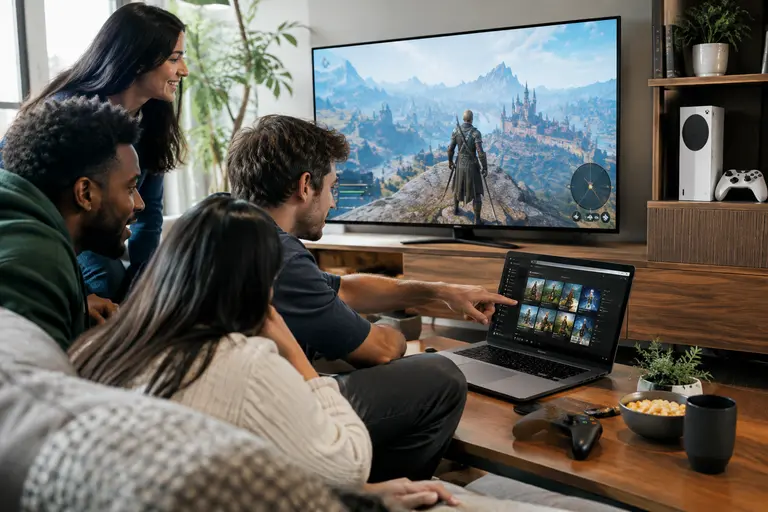
The research notes point to Microsoft testing ad-supported cloud gaming with Xbox Insiders in July 2026, using ads before sessions rather than pausing games mid-session. That distinction is significant. Cloud gaming has server costs, device flexibility, and access-tier logic that can make an ad-supported entry point easier to explain. A pre-roll ad before a roughly one-hour session is a very different experience from an ad that freezes gameplay after credit expires.
If Microsoft ever used this patent in a consumer product, a free or budget cloud tier would be the more plausible fit than a premium single-player release. That is analysis, not confirmation. The company could decide not to use the system at all, could limit it to experiments, or could reshape it before release. Players should avoid treating the patent as a launch plan.
Why Hardware And Service Context Matter
Gaming is no longer only about what runs on a local box. Services, screens, controllers, accounts, and cloud access all shape how players experience games. For related hardware and gaming coverage from the same network, enthusiasts can check out Cooler Master Gaming, which covers gear and player-facing tech in that broader context. Ads are part of that same access question: who pays, how access is subsidized, and what compromises are attached.
For players comparing monetization trends, our earlier coverage of in-game ads and player trust is relevant because the core issue is not whether ads can exist in games. It is whether their presence respects the player’s time, purchase expectations, and attention.
Microsoft Ad Patent And Player Choice
What Players Can Reasonably Take From It
The reasonable takeaway is restrained. The Microsoft Ad Patent shows that Microsoft has explored a system for timed or progress-based ad interruptions in interactive software. It does not prove that Xbox players will see boss-fight ads, Game Pass interruptions, or ads in purchased games. Patents often cover possibilities before any market decision is made.
Still, the filing is worth watching because it reflects a broader push toward flexible pricing, cloud access, and ad-supported entertainment. If ads remain outside gameplay or inside clearly labeled free tiers, many players may judge them as a trade. If they enter paid games or interrupt carefully paced moments, the cost to trust could outweigh the access benefit. For now, the best consumer position is simple: treat the patent as a signal, not a promise, and judge any future product by control, transparency, frequency, and whether paid players can avoid interruptions.