

The August 2026 Esports World Cup drops the top 32 Counter-Strike 2 rosters directly into Riyadh for a massive showdown. This tournament strips away the usual safety nets found in standard seasonal circuits. Teams either show up ready to execute perfect site hits, or they pack their bags early. With a $2,000,000 prize pool on the line, front offices and coaches feel immense pressure to perform on the global stage.
Fans tracking the outright winner odds are already looking at heavy favorites like Natus Vincere and Team Spirit. Before placing any wagers on the group stage upsets, checking Everygame’s market coverage and review provides a clear picture of the current betting lines and payout structures. The odds shift constantly based on early performance, making reliable sportsbooks a necessary tool for serious analysts tracking the event.
The Brutal Group Stage Draw
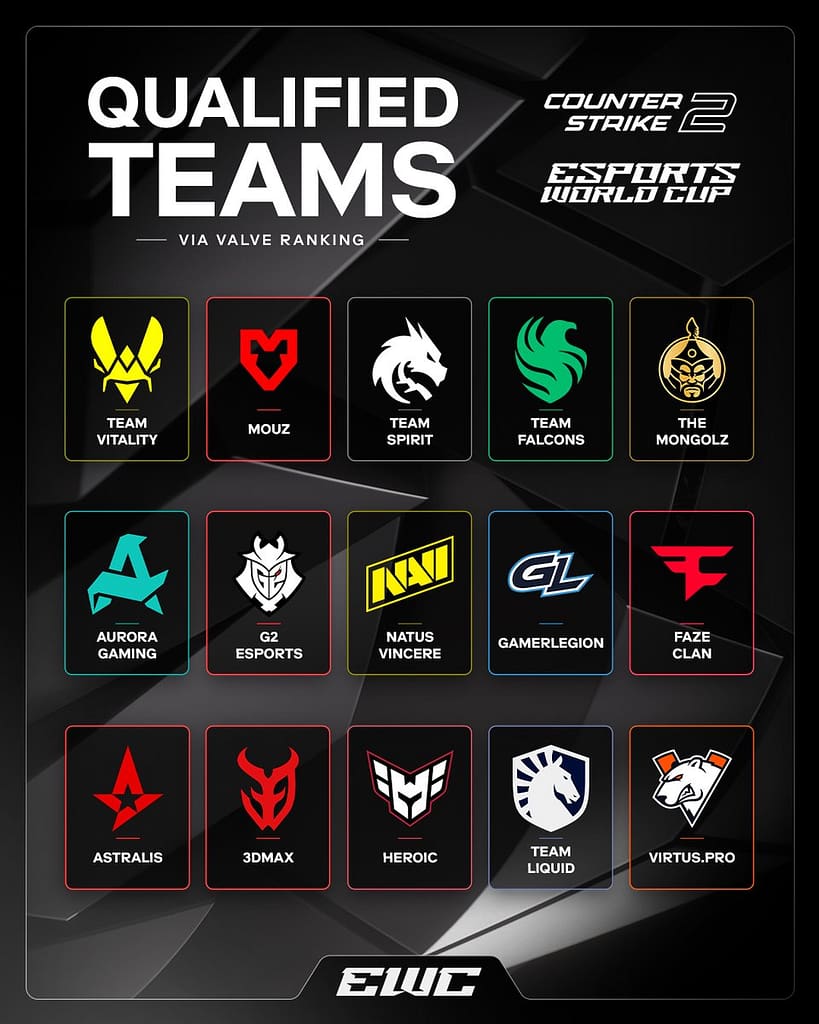
The 32-team field breaks down into four double-elimination groups of eight. This structure forces immediate high-stakes matchups right out of the gate. Group C caught immediate attention from the community. Putting Vitality, MOUZ, and 100 Thieves in the same bracket creates a brutal path to the playoffs. Only the top four teams from each group advance to the single-elimination playoff bracket.
Let’s look at the group distribution and the highly favored heavyweights:
| Group | Top Seeded Roster | Notable Challenger |
| Group A | Team Spirit | G2 Esports |
| Group B | Team Falcons | FaZe Clan |
| Group C | Team Vitality | MOUZ |
| Group D | Natus Vincere | FURIA |
These early best-of-three series dictate the entire momentum of the event. A slow start in the opening matches sends teams straight to the lower bracket, leaving no margin for error. Tracking live bracket progression on the official HLTV event hub keeps you updated on which squads face elimination each morning.
Analyzing the Prize Pool Distribution
Winning the Grand Final secures a massive $1,000,000 payday for the champions. The financial incentives extend far beyond just the player payouts. The organization that wins the tournament earns 1,000 Club Championship points. These points contribute directly to the cross-game franchise standings that dictate the overall Esports World Cup organization winner.
We see organizations pushing their rosters past regular limits to secure those Club Championship points. A deep run in the CS2 bracket completely changes an organization’s financial trajectory for the entire year. This dynamic creates a highly volatile competitive atmosphere. Players are fighting for their own bank accounts, but they are fighting for their organization’s global standing at the exact same time. Check our daily competitive news updates for ongoing analysis of the franchise leaderboards.
Meta Shifts and Map Pool Adjustments
LAN environments force different playstyles compared to online qualifiers. The aggressive peeks and risky mid-round calls that work online get punished instantly on a zero-ping server. In-Game Leaders (IGLs) rely heavily on structured defaults and precise utility execution to isolate defenders and secure map control.
We are seeing a heavy reliance on Anubis and Ancient in the veto phases. Teams want maps that allow dynamic mid-round rotations. Stagnant maps like Mirage often get floated to the third decider map, forcing teams to rely on raw mechanical skill to close out the series. The current economy punishes forcing armor and pistols in the second round. Smart teams take the full economic reset to guarantee a strong rifle buy in the third round. Reviewing the Liquipedia EWC match statistics reveals exactly which teams manage their economy effectively under pressure.
Teams that adapt to the LAN meta survive the group stage. The squads trying to run outdated set pieces will find themselves eliminated before the weekend playoffs even begin.